
Overview
A Digital Twin (DT) is a coordinated collection of digital models that mirrors a physical system throughout its lifecycle. Continuously refreshed with real-time data, it relies on reasoning techniques such as simulation and machine learning to support tasks ranging from prediction to real-time decision-making.
Because no single model can capture every aspect of a complex system, a DT brings together diverse disciplines — architecture description, modeling & simulation, and data science — each contributing models with different structures, fidelities, and purposes.
These models can be classified along several dimensions, such as inference method (inductive vs. deductive), modeling approach (empirical vs. mechanistic), concern (behavioral, structural, safety, etc.), purpose (descriptive vs. prescriptive), fidelity, and temporal scope.
Most DTs rely on hybridization, combining complementary models — data-driven, physics-based, or mixed — to improve accuracy, robustness, and adaptability. Techniques such as physically informed neural networks and uncertainty quantification illustrate how heterogeneous models can be fused to exploit their respective strengths. Nowadays, this hybridization is realized in an ad-hoc manner, and consequently requires a more systematic and principled approach.
To address this issue, the Catalyst project focuses on three related research axes of model hybridization:
- the definition of consistent interfaces for querying and manipulating models;
- the specification of composition operators to hybridize and federate models;
- the realization of proper verification and validation tools to populate these interfaces.
Through these research axes, the objective of Catalyst is to develop a set of methods and tools to manipulate deductive and inductive models homogeneously, keeping their main characteristics accessible in order to reliably hybridize and federate them.
Associated Use Cases
Use cases in Catalyst will include diverse Digital Twins representing various physical entities. Use cases are currently under elicitations.
Investigator & Project Partners
The project involves nowadays the following partners: Université Côte d’Azur, I3S, Inria, CETIM, INRAE, Telecom Paris, Aniti, Université de Pau et des Pays de l’Adour, IMT-Atlantique, CEA et IRIT.
Principal Investigator:
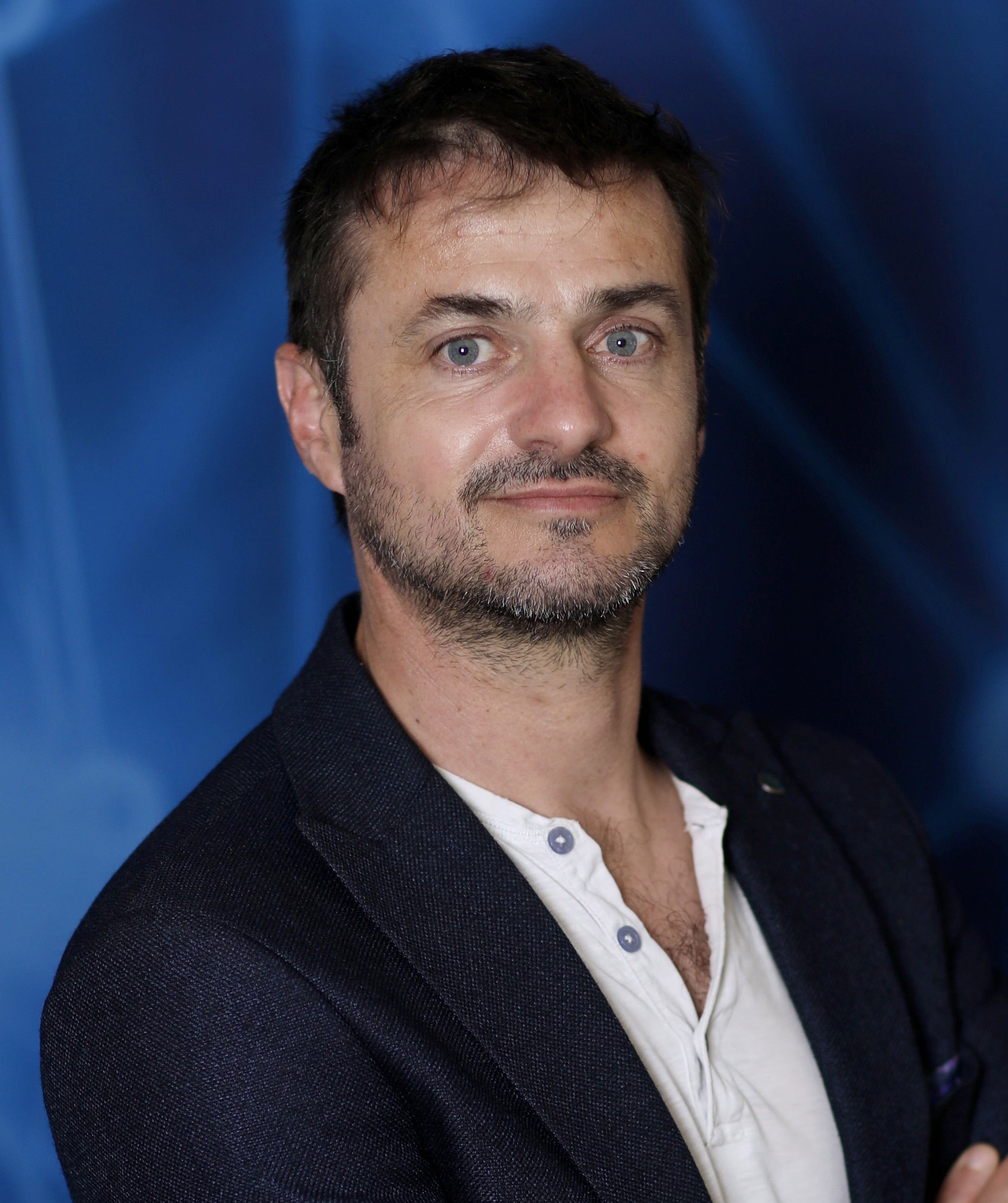
Julien Deantoni
Full Professor at Université Côte d'Azur and Head of the Kairos Team
Julien Deantoni is full professor at Université Côte d’Azur and head of the Kairos team. He applies rigorous modelings and abstractions for heterogeneous models since his PhD thesis in 2007. He published on the importance of handling the globalization of modeling languages more than 10 years ago. Since then, he has published various papers and developed tools to facilitate this globalization. He has also published papers highlighting the need to consider the semantics of the different models for more precise and efficient collaborative simulations. More recently, he worked on the notion of multi-fidelity in Digital Twins and already hybridized DT’s models in order to mitigate uncertainty and consequently provide better control in the PT. Conjointly, he participated to numerous collaborative projects
Participating Partners:


External Partners:

Project Implementation
The project is structured into three cohesive work packages, with multi-fidelity and uncertainty addressed throughout.
Workpackage 1: Interface for Hybridization(s)
Leader: UPPA
Partners: Inria (DiverSE, Hycomes, Kairos), UniCA, INRAE, Telecom Paris (ACES)
Objectives:
- Standardize the manipulation and characterization of heterogeneous models
- Ensure homogeneous and automatic reasoning while preserving model specificity
Key Tasks:
- Create structured metadata for model management
- Provide functional and extra-functional interfaces for hybridization
- Enable model mutation and adaptation capabilities
Workpackage 2: Hybridization and Federation Operators
Leader: Kairos (Inria)
Partners: DiverSE (Inria), INRAE, IRIT/ACADIE (CNRS), Telecom Paris (LabSoc)
Objectives:
- Identify and formalize structural and behavioral hybridization patterns
- Replace ad-hoc processes with systematic hybridization operators
Key Tasks:
- Elicit and formalize operators for simulation workflows
- Define operators for model hybridization
Workpackage 3: Interface and Composition Analysis
Leader: Telecom Paris (LabSoc)
Partners: Inria (DiverSE, Hycomes), CNRS IRIT (ACADIE), UPPA, CEA (LITEN), UniCA, Univ. Toulouse (Aniti), Univ. Toulouse Jean Jaurès (IRIT/SM@RT)
Objectives:
- Provide analysis of models, interfaces, and hybridization operators
Key Tasks:
- Analyze models to enrich their interfaces
- Identify synergies and hybridization opportunities across interfaces
- Analyze hybridization operators to improve resulting model interfaces
Related publications
Engineering Digital Twins: A Research Roadmap
Benoît Combemale, Pascale Vicat-Blanc, Arnaud Blouin, Hind Bril El Haouzi, Jean-Michel Bruel, Julien Deantoni, Thierry Duval, Sébastien Gérard, Jean-Marc Jézéquel • 2025
Conference Paper • EDTconf 2025 - 2nd International Conference on Engineering Digital Twins
Model‐Driven Engineering for Digital Twins: Opportunities and Challenges
Judith Michael, Loek Cleophas, Steffen Zschaler, Tony Clark, Benoît Combemale, Thomas Godfrey, Djamel Eddine Khelladi, Vinay Kulkarni, Daniel Lehner, Bernhard Rumpe, Manuel Wimmer, Andreas Wortmann, Shaukat Ali, Balbir Barn, Ion Barosan, Nelly Bencomo, Francis Bordeleau, Georg Grossmann, Gabor Karsai, Oliver Kopp, Bernhard Mitschang, Paula Muñoz Ariza, Alfonso Pierantonio, Fiona Polack, Matthias Riebisch, Holger Schlingloff, Markus Stumptner, Antonio Vallecillo, Mark van den Brand, Hans Vangheluwe • 2025
Journal Article • Systems Engineering
Modeling and Digital Twins: Insights and Strategies for Software Engineers
Silvia Abrahão, Miroslaw Staron, Judith Michael, Benoît Combemale, Marsha Chechik • 2025
Journal Article • IEEE Software
Related positions
Compositional Hybrid Digital Twins Models
PhD position on compositional hybrid modeling and digital twin frameworks
- Master's degree in Computer Science, Computational Biology, Applied Mathematics, or related field
- Background in modeling complex systems or machine learning
- +3 more requirements
Formal Engineering Methods for Digital Twin Development
PhD position on formal engineering processes and methods for building reliable multi-paradigm digital twins
- Master's degree in Computer Science, Software Engineering, or related field
- Strong background in formal methods, modeling languages, or system engineering
- +3 more requirements
Interpretable and Robust Machine Learning for Physics-Based Numerical Simulations
PhD position on statistical methods to improve interpretability and robustness of machine learning models used to accelerate physics simulations
- Master's degree in Applied Mathematics, Statistics, Computer Science, or related field
- Strong background in statistics, machine learning, or scientific computing
- +3 more requirements
Ongoing Research Positions
Distributed Abductive Reasoning for Self-Explaining Digital Twins
PhD position on explainable and distributed reasoning mechanisms to bridge the reality gap in hybrid digital twins
Model Management for Explainable and Traceable Hybrid Model Management for Digital Twins
PhD position on explainable and traceable management of hybrid physics-based and machine learning models in digital twins
Smart Scenario Exploration for Digital Twins through Validity Envelopes
PhD position on model interoperability and scenario exploration for environmental digital twins, focusing on validity envelopes for scientific models
Model Hybridization in Digital Twins for Mechanical Engineering
CETIM-funded PhD on hybrid modeling for digital twins of mechanical equipment, combining model simulation and data science to enable predictive maintenance, optimization and decision support on the CETIM JNEM thermal-hydraulic loop.